

Leonardo DiCaprio in One Battle After Another
This was a very good year for films. It’s hard to see how 2026 will live up. Of course, like every year, there are things I missed. What I most wish I could have seen before making this list is The Voice of Hind Rajab, the much-lauded docudrama about the murder of a five-year-old girl and her family by the Israeli Defense Forces. The Hi-Pointe will be showing it on January 30th, and if you use film lists like these as a source for recommendations, you can go ahead and take my blind rec for that one. I’ll certainly be seeing it. As for the rest, I most definitely vouch for their quality. They include many popular releases you’ll most likely see on other year-end lists. But there are a few lesser-known titles I’m excited to rave about, as well.
Honorable Mentions: April, Black Bag, Bring Her Back, Chain Reactions, Companion, Cloud, Die My Love, Drowning Dry, Eddington, The Encampments, John Candy: I Like Me, Pepe, Magic Farm, Misericordia, The Perfect Neighbor, Presence, The Shrouds, The Surfer, Together, Vulcanizadora, Weapons, Youth (Homecoming)
20. The Heirloom
19. The Long Walk
18. The Ugly Stepsister
17. Friendship
16. Put Your Soul on Your Hand and Walk
15. Riefenstahl
14. Marty Supreme
13. Resurrection
12. Secret Mall Apartment
11. The History of Sound
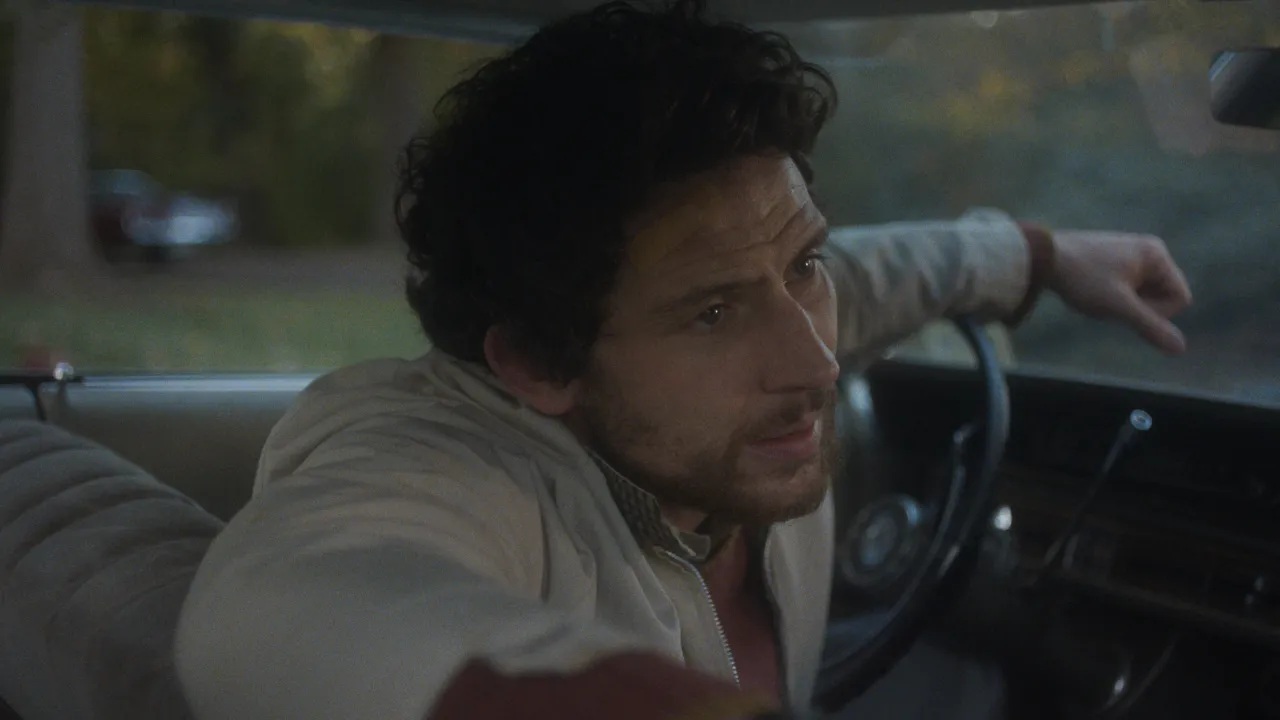
10. The Mastermind
Kelly Reichardt has cited the films of Jean-Pierre Melville as inspiration for The Mastermind, and its smooth jazz soundtrack and unhurried pace would confirm this. But as the idealistic protagonist unwittingly stumbles into a series of minor picaresque scenarios and revolutionary activities he’s long skirted in favor of more selfish and egotistical criminal pursuits, the film takes on the characteristics of 1970s Italian political satire, something that Lina Wertmüller might have made if she’d taken a sudden interest in early modernist American painters. In shaping the film this way, Reichardt instills it with the pleasures of Cool European crime films and also the wryness of international working-class humor.

9. The Phoenician Scheme
While many have great fondness for Wes Anderson’s earliest films, like Rushmore and The Royal Tenenbaums, I’m more drawn to his later work, from his greatest film The Grand Budapest Hotel onward. Last year’s Asteroid City took a major leap in terms of narrative, utilizing a nesting doll structure to explore the role of creativity and storytelling in excavating emotional truths and processing life experience. The Phoenician Scheme furthers Anderson’s efforts in widening his narrative scope, this time expanding the use of physical setting in an intricate, globetrotting hybrid of crime caper, looney-tunes comedy, and espionage. For those who complain that Anderson is too much “style-over-substance,” well, it’s hard to tell if this will leave them feeling confused or vindicated. This is without a doubt one of Anderson’s most ornate, indulgent, and stylistically maximalist films, but also one of his most narratively propulsive and elaborate and not without his recurring themes of absent parents, ambivalent children, late-in-life search for meaning, and attempts at moral redemption. While staying true to his instincts and proclivities, Anderson has lately been demonstrating that he’s capable of a lot more than he’s given credit for.

8. Afternoons of Solitude
Albert Serra’s disturbing documentary about bullfighter Andrés Roca Rey uses its narrow subject to slowly and subtly expound on the psychology of power and privilege. On the surface, Afternoons of Solitude presents a detached view of a brutal sport and, conversely, a silent but intimate exploration of its practitioner. But beyond the simple character study is a quietly critical examination of the environments in which the powerful and influential dwell. It is in conversation with two other works of art: Herman Melville’s Moby Dick and George Franju’s 1949 short film Blood of the Beasts. In studying whalers, Melville made discoveries about humanity’s irrational quest for dominion over nature. In Franju’s depiction of French slaughterhouses, we see the emotionlessness and assembly-line efficiency of barbarism. In filming not just the slaughter of bulls but the over-the-top adulation of the matador, Serra reveals the ego-massaging echo chambers that tyrants inhabit, where the life of others has no value and valorization is overzealous and constant. Watching Afternoons of Solitude helps one understand the lived experience of many world leaders.

7. It Was Just an Accident
Deceptively simple, It Was Just an Accident takes a straightforward revenge premise and spins a dark comedy with political and even religious overtones out of it. Having been banned from filmmaking by the Iranian regime, filmmaker Jafar Panahi has made all his recent films, including this one, in secret. And yet It Was Just an Accident, as opposed to his other exilic works, is almost unsettlingly public. Not only does it appear to have been made more conspicuously, shot on the streets in well-populated areas and requiring more crew to achieve its production value, but its message is blunt, confrontational, and critical. Having been imprisoned multiple times himself, making a film about a man kidnapping and attempting to kill his former captor is quite the provocation. But Panahi can also sidestep accusations of political agitation from his own regime by virtue of his principled ambiguity. He spends most of the movie casting doubt on the beliefs of his characters, and even when the film does resolve its most burning mystery, it does not offer moral answers. A comedic tone helps carry a sense of ambivalence throughout, but as Panahi moves away from such humor and the film careens towards its intense and sobering ending, that ambivalence morphs into a moral and existential uncertainty that is nothing short of haunting.

6. Castration Movie Anthology i and ii
There’s not a huge market for 4 ½-5 hour long underground trans films shot on tape, making the enormous effort Louise Weard puts into her work all the more admirable. This is unapologetic, messy, deeply personal art wrung out of tireless labor. Anthology i: Traps, released in festivals and microruns in 2024 but not widely available until 2025, tells two stories: that of a hapless and immature film bro in a crumbling relationship, and that of a self-absorbed trans sex worker (played by Weard) as she navigates strained friendships and doomed personal ventures. In their drawn out and freewheeling form, these stories cover a variety of topics, such as the complex and sometimes paradoxical psychology of inceldom, the unsung hardships of transfolk both internal and within the queer community, and the kind of toxic dynamics that go unexamined in long term relationships, both romantic and platonic. Anthology ii:Best of Both Worlds takes the oft-repeated rhetorical cudgel “trans ideology” as a creative prompt, literally depicting a cult of transwomen led by an AI overlord who use therapy speak and asceticism as tools for conformity, insularity, and psychological abuse. While mocking the transphobic imagination, Best of Both Worlds also uses this premise to explore legitimate issues and harms done within trans communities unflinchingly, all while still celebrating and reinforcing the validity of trans identity. Weard is currently producing a third part to this anthology, making it one of the highest quality underground epics most people won’t watch. But its audacity is something that has to be seen to be believed.

5. No Other Choice
Park Chan-wook’s black comedy thriller about the vicissitudes of the job market and the desperation it drives people to contains many of the same pleasures as his revenge trilogy—violence (sometimes cathartic, sometimes harrowing), grim irony, twisty plot—while being expressly more political. But what really sets it apart is the way it expands on expected themes. No Other Choice doesn’t just satirize callous corporatism, but draws attention to the absurdity and spiritual violence of work culture in the context of modernization. Industrialization promises personal livelihood at the expense of global destruction, but late-stage capitalism and rapidly progressing AI threatens even this precarious security, throwing people into existential crises and pushing them into cutthroat behavior. Even when they find success, the result is a meaningless life that contributes more harm to the world than if they simply became criminals. When society demands we pretend such work is inherently worthwhile and honorable, it’s important to ask, what use are all these bullshit jobs if they ultimately just turn us into machines and destroy the planet?

4. 28 Years Later
Danny Boyle’s return to the world of 28 Days Later brings with it new innovations in digital filmmaking, just like its predecessor. Shot on an iPhone, its jittery, hyperfilter texture creates an urgency and vivacity usually only seen in the throes of a bad mushroom trip. His foray into new terrain is not only technical but thematic. Although the anti-colonial and anti-patriarchal themes of 28 Days provide a basis, 28 Years devotes much more of its focus to grander explorations of life and death, survival, and cultural identity. While horror movies about grief have oversaturated the market, Boyle manages to nestle the topic within a grander narrative of preserving love and memory, perseverance, and coming of age. He flips these notions on their head, as well. In the world of 28 Years Later, memories also cling and haunt, evils persevere, and people and societies regress into tribalism and childlike fantasies. 28 Days imagines the kind of justifications people might come up with for barbaric acts in the midst of disaster. 28 Years imagines the kind of lies a society might tell itself in order to rebuild. The result is a feudal, Arthurian nightmare where noble peasants seek mysterious sorcerers, a bizarre rogue gallivants about with a band of merry men, and Jimmy Savile is still a role model.
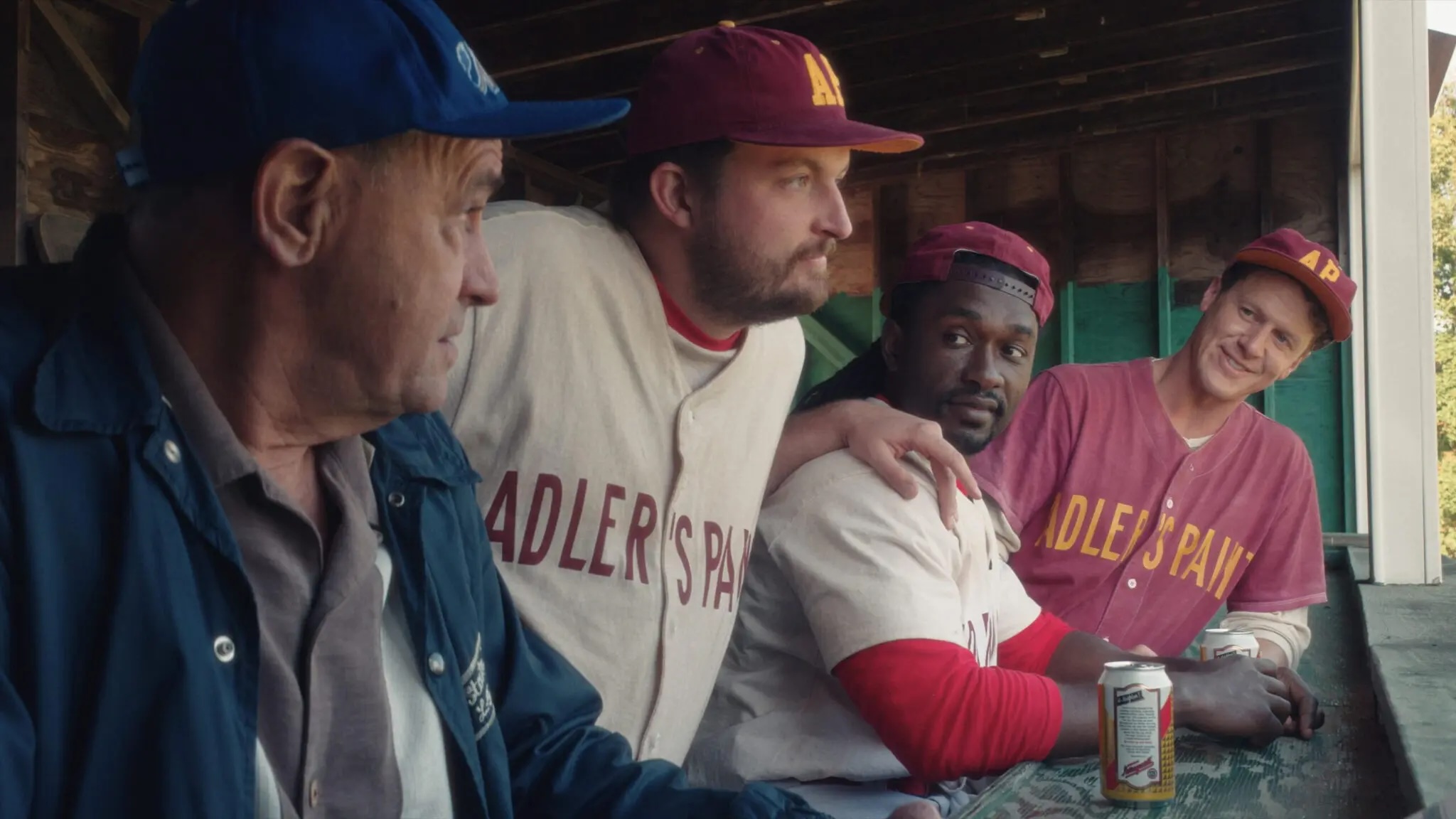
3. Eephus
Eephus is one of several new works of slow cinema by young, low-budget filmmakers currently gaining attention in the States. Although not as subtle or meditative as what the Asian slow cinema movement has put out, directors Carson Lund and others under the Omnes Films banner are creating a niche for contemplative and formally minimalist films with a uniquely American appeal. And what could be more American than baseball? Eephus celebrates the social significance and spiritual power of third spaces and communal recreation while mourning their gradual loss—much like Tsai Ming-liang’s Goodbye Dragon Inn—but with the cultural specificity of a uniquely American sport, yielding a humorous but poignant depiction of aging, small town character, the subtle experience of passing time, and the precious precarity of male social bonds.
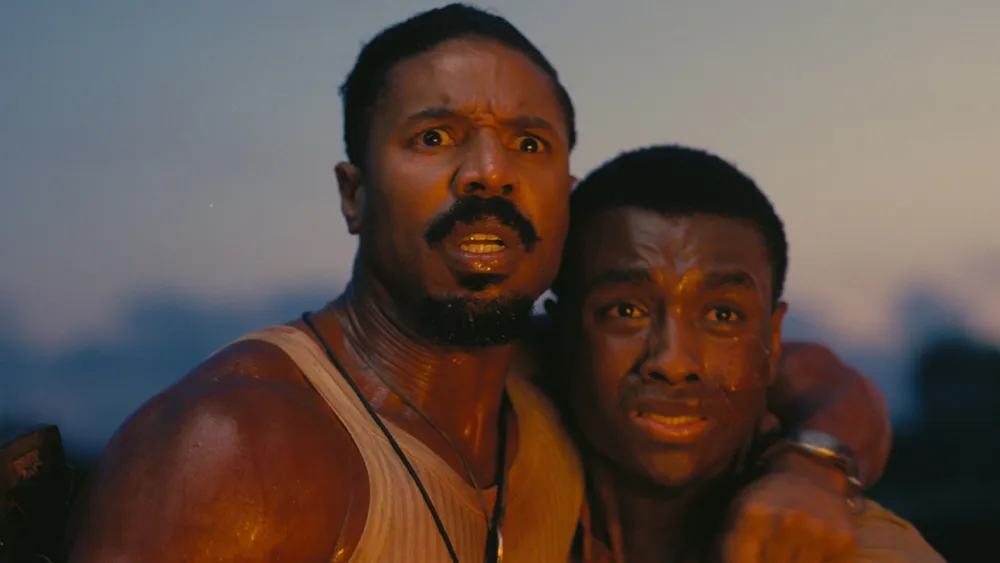
2. Sinners
Ryan Coogler took the barren frame of From Dusk Till Dawn and fashioned a proper film out of it that more fully explores character and culture. It’s more grandiose than Coogler’s Marvel ventures because, in addition to elaborate setpieces and sky-high production value, there’s a passionate and personal core. And it’s far more impressive, as well, in both construction and intention. Coogler places so much trust in the audience to spend the amount of time he does setting up character and scenario before introducing any horror, but it’s a wise choice and one we haven’t seen afforded to directors in a long time. The difference between cultural appropriation and cultural appreciation/sharing is hard enough for many people to express directly, much less weave coherently into a musical action horror film. I’ve not seen a dual performance by an actor more seamless than Michael B. Jordan’s as Smoke and Stack. And Irish folk songs have never had such widespread appeal. Basically, this is just one of those high-quality pieces of mainstream entertainment with a message that used to get made regularly but now is now a rarity. As a lover of bloody horror movies, blues, and folk ballads, this movie was practically engineered to please me.

1. One Battle After Another
Although it’s probably too early to say, One Battle After Another might just rank up alongside There Will Be Blood as one of Paul Thomas Anderson’s most enduring masterpieces. A righteous, galvanizing, disgruntled but hopeful political action comedy that could conceivably be dismissed by cynics due its Big Budget Blockbuster With Movie Stars nature but ultimately works because of its political potency and how much of a fucking blast it is to watch. Paul Thomas Anderson’s direction is at the most energetic and robust since his Boogie Nights era, the supporting cast is simply immaculate (especially Benicio del Toro, who plays one of PTA’s most charming outlaws), and the writing doesn’t compromise. He makes every character believably flawed and doesn’t avoid the humor that arises when genuine but hapless leftists get in over their heads, but also never dismisses their intent or equivocates over politics. There’s an undeniable sincerity to the film’s revolutionary bent that transcends the privileged means of its production. What I’m trying to say is, I don’t care if Leonardo DiCaprio was on a yacht with Jeff Bezos, this movie made me want to overthrow the government. | Nic Champion
