

Still from the Gorillaz animated short film The Mountain, The Moon Cave & the Sad God courtesy of Nasty Little Man PR
First Thought Fridays is a (mostly) weekly column offering quick-hit takes on some of the albums released this week, serving up first impressions, favorite or least favorite songs, and whether or not they’re worth a second listen. Check back for more each Friday night or Saturday morning.
Whew! Finally we’re caught up, and finally I’m posting again on a Saturday! Given what I already know is coming in the next couple weeks, don’t expect that to be a regular thing just yet. Here are my reviews of a few more stragglers from last week as well as two of this week’s releases, one phenomenal and one very much not. Here are my thoughts, in the order in which I listened to ‘em:

Gorillaz, The Mountain (Kong): I don’t know that I’ve experienced a piece of art as centered around death yet so uplifting and life-affirming as the new Gorillaz album. Having both recently lost close family members, Gorillaz masterminds Damon Albarn and Jamie Hewlett decamped to India and crafted a song suite influenced by Indian music that explores death not as an end but as just another part of life. The songs are haunted not just by the death in the lyrics but by the voices of contributors on previous Gorillaz albums that have since left this world, from acting legend Dennis Hopper to soul king Bobby Womack to Albarn’s The Good, The Bad and The Queen cohort Tony Allen to rappers Proof and David Jolicoeur of De La Soul.
Making the biggest impression among the dearly departed is The Fall frontman Mark E. Smith, who rips through the pumping new wave tune “Delirium.” And that song is as good an indication as any of how the album, though about sad subjects, is not at all a sad album. Other examples abound, from “Orange County,” whose melancholy lyrics (“You know the hardest thing/ Is to say goodbye to someone you love”) are paired with a jaunty whistle, or the giddy beats of the Sparks collab single “The Happy Dictator.” There’s also a noted late-career-Bowie influence, particularly on “Casablanca” (which features Paul Simonon of the Clash and Johnny Marr of the Smiths on the same song, which is just wild) and “The Empty Dream Machine.” At 66 minutes, the album is a bit too long and has a couple clunkers (the aforementioned “The Empty Dream Machine,” as well as “The God of Lying”), but on the whole it’s a strong album with an emotional core that hits harder than you’d ever expect from a cartoon band. Will I Listen Again?: Absolutely.

Tony Bontana, My Name (Everything Is Perfect Records): The albums I choose to cover in this column come from a lot of different places. Sometimes it’s a favorite whose new release I’ve been counting down the days for. Sometimes it’s an interesting press release I find in my inbox. Sometimes it’s scanning the “List of 2026 Albums” Wikipedia article and seeing a name I always wanted to check out. And sometimes, as in the case of Tony Bontana, I read an interesting review and think “Wow, that sounds up my alley!”
Unfortunately, I think Paste steered me wrong on this one. Tony Bontana is a UK rapper and producer with an in-your-face vocal style and a taste for spacious beats and vocal hooks that have been twisted and distorted until they sound alien. All of these individual elements are fine, it’s the combination that doesn’t work: the songs sound like the raps, beats, and hooks were slapped together with zero regard for whether they’d actually go together, and they rarely do. Also, at 15 songs in under 30 minutes, the songs don’t seem to really go anywhere; they just sound like three different songs fading in, playing on top of each other, and then fading out again about two minutes later. Only the trip-hop “Hype Williams & Holy Water” actually works, and even that is just okay. Will I Listen Again?: No, this one’s definitely not for me. But check out Paste’s review and see if maybe it’s for you.

Erin LeCount, Pareidolia (Atlantic): Another way for musicians to find your way into this column: give your album a really cool title. In Erin LeCount’s case, her new EP is named after what Webster’s dictionary defines as “the tendency to perceive a specific, often meaningful image in a random or ambiguous visual pattern” such as, in the case of yours truly, seeing faces in the patterns on everyday inanimate objects. According to LeCount, the self-written, -recorded, and -produced EP “tells the story of a downward spiral. The tale of falling down a rabbit hole, a willing return to self-destruction.” In practice, that sounds like the synthy alt-pop of Imogen Heap/Frou Frou as filtered through the maximalist pop of Chappell Roan. Will I Listen Again?: Probably. The songs don’t grab ahold of your ears as instantly as Roan’s earworms do, but they’re sonically appealing enough that I’d like to give them a deeper listen.

Bruno Mars, The Romantic (Atlantic): With how perpetually omnipresent he is, it’s a little wild that it’s been a full decade since Bruno Mars’ last solo album. The Romantic finds the hitmaker very much in the same vein as his Anderson .Paak-assisted throwback soul side project Silk Sonic. The album is packed with lite funk, Latin-inspired rhythms, the lush strings and blaring horns of classic Barry White and Curtis Mayfield, and other swingin’ sounds of the Seventies, with Mars leaning into the most Stevie Wonder-ish part of his vocal range. The opening four songs are hit after hit, particularly the positively joyous dancefloor romance “I Just Might.” The ballads don’t quite land as hard; the Chi-Lites-light “Why You Wanna Fight?” drags the proceedings to a halt at the album’s halfway point, while the more Smokey Robinson-style “Nothing Left” and “Dance With Me” are better but still not as appealing as the album’s dancier front half. Still, man: I went into this having never heard a whole Bruno Mars album and not having particularly high expectations for this one and was impressed by how appealing these songs are. Talk about a crowd-pleaser. Will I Listen Again?: I just might listen to “I Just Might” over and over again.

Bill Callahan, My Days of 58 (Drag City): It’s been 35 years since Bill Callahan released his first album under the moniker Smog, and 21 more since he retired said moniker and started recording under his own name. Full disclosure: it’s also been 21 years since I’ve checked in with Callahan: I reviewed that last Smog record, 2005’s A River Ain’t Too Much to Love, calling it “a luscious, austere jewel of an album,” but other than hearing a few songs on the radio in the intervening years, I didn’t keep up with his output since then.
My Days of 58 shows what a fool I was to not keep tabs on Callahan as this, too, is a luscious, austere jewel of an album. Callahan still works very much within his wheelhouse: lo-fi folk, almost like a cross between Nick Cave, Nick Drake, Bob Dylan, and Robert Pollard, all delivered in Callahan’s inimitable baritone, a mix of a little Jay Farrar, a little Tom Petty, and a lot of Eddie Vedder. The arrangements are typically simple, but anything but bare bones, centered around his acoustic guitar strums and insistent drums with the occasional horn accent or backing vocal added only when the songs really need it. Staring down his 60th birthday this June, My Days of 58 finds Callahan very much in a “what does it all mean” phase, asking “Why Do Men Sing,” exploring “The Man I’m Supposed to Be,” and decrying the artificiality of so much modern music (“I’m not a robot and I never will be/ Autotune? I don’t want to hear it/ That’s just prepping us to be satisfied/ Being sung to by something without a spirit.”)
But the album’s centerpiece is “Pathol O.G.” (as in “Is this creativity or pathology?/ Am I the Pathol O.G.?”), where Callahan tells his musical life story in song: “You know, I’ve been writing songs and singing them for nigh on thirty years/ I like it, I love it/ It started out as a way for me to communicate with other people and myself and the spirits/ I don’t want to say that it saved my life, but it gave me a life.” What an inspiring love letter to the creative life this album is. Will I Listen Again?: Definitely.
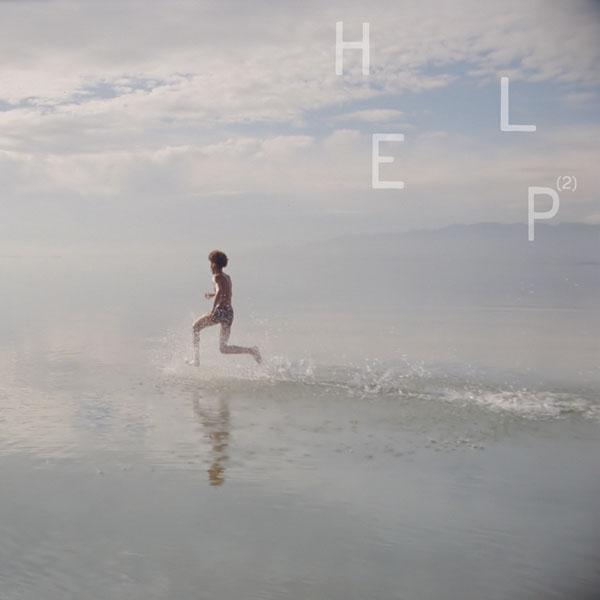
Various artists, HELP(2) (War Child Records): In 1995, the charity War Child put together HELP, a compilation album to raise money for refugees from war-torn Bosnia and Herzegovina. The high-concept comp was recorded in a single day and released just a few days later, featuring an insane lineup of the hugest alternative acts in the UK from Britpop (Oasis, Blur, Suede) to alt-rock (Radiohead, the Stone Roses, Manic Street Preachers) to shoegaze (the Boo Radleys) to trip-hop and electronica (Portishead, Massive Attack, Orbital, the KLF) to British musical royalty (Paul McCartney, Paul Weller, and Noel Gallagher all performing a Beatles cover together), all in one place. Due to the rushed nature of the project, not every song hit, but as a whole it offered a priceless document of the mid-’90s UK scene at its peak.
Thirty years later, the folks behind War Child once again made the call, collecting 23 fantastic songs from an equally eclectic and wide-ranging group of artists to raise funds for war refugees, a cause that sadly never lacks a need. This time out, the “all in one day” restriction was lifted, allowing each artist to bring their A-game, while the majority of songs were recorded at the same place (Abbey Road Studios) by the same producer (James Ford). The result has a sonic consistency despite the wide-ranging musical styles (the songs throughout tend to be on the slow and somber side, but it’s not at all a dour affair), and having to gather in one place led to interesting off-the-cuff collaborations and crosspollinations. Take “Flags,” just as one example: it features Johnny Marr of the Smiths, Dave Okumu of the Invisible, and Adrian Utley of Portishead on guitar; Seye Adelekan of Gorillaz on bass; Femi Koleoso of Ezra Collective on drums; Damon Albarn of Blur, Grian Chatten of Fontaines DC, and poet Kae Tempest on lead vocals; and Jarvis Cocker of Pulp, Carl Barât of the Libertines, and a half dozen others name acts on backing vocals.
If you lived in the 1990s, you know what an impressive statement this is to make about a compilation CD: there are 23 songs here, and there is not a weak one in the bunch. The list of contributing artists is insane, from Depeche Mode to the Last Dinner Party to Wet Leg to Arlo Parks to Big Thief to Pulp to Foals. And those are just the good songs; here, in my opinion, are the great ones: Arctic Monkeys contribute their best song in a dozen years in “Opening Night,” Beth Gibbons of Portishead kicks in the cover of the Velvet Underground’s “Sunday Morning” that I never knew I needed in my life, Pakistani singer Arooj Aftab duets with and Beck on the aching torch ballad “Lilac Wine,” English Teacher and Blur’s Graham Coxon team up on the swirling “Parasite,” and “Say Yes” is a brittle, beautiful ballad by beabadoobee. But the very best of the best is Olivia Rodrigo, backed by Coxon’s guitar on a downright phenomenal cover of the Magnetic Fields’ classic “The Book of Love,” a take so good that it just might wake up the hipsters of the world up to what a great musician she is. Will I Listen Again?: Yes, again and again and again and again.

Morrissey, Make-Up Is a Lie (Sire): Morrissey certainly doesn’t make it easy to be a Morrissey fan. His name often tops people’s lists of former favorite musicians that they just can’t listen to anymore, and while I certainly get it, I’ve just never been able to quit him entirely. Part of it is that the Smiths were a formative part of the development of my musical taste. Part of it is that he kept making good music, with a winning streak of great albums that started with his 2004 comeback You Are the Quarry and continued up through at least 2017’s Low in High School. (No judgement on the albums he put out in 2019 and 2020—I somehow missed their existence until researching this article.) And as gross as his public comments about immigrants could be sometimes, he didn’t seem irredeemable: the last time Morrissey successfully played a show in St. Louis (at the then-Peabody Opera House/now-Stifel Theatre in 2017), I walked past a handful of people protesting Moz’s most recent examples of ignorant xenophobia only to see him include as part of his show a bold, daring, unsettling, unflinching, downright hard-to-watch video decrying police brutality.
So with all the good will and benefit of the doubt that the above paragraph implies, understand that it pains me to say that his latest album, Make-Up Is a Lie, is, um, not great. The songs are just kind of gray and nondescript and lack hooks; the mix puts Morrissey’s vocals front and center but his voice often sounds kind of wavering and hesitant, like scratch takes in need of further refinement. The best songs of the bunch: “Amazona,” a glammy Roxy Music cover where Moz finally sounds engaged; “Zoom Zoom the Little Boy,” a bouncy track with some silly, childlike lyrics but much more energy than pretty much anything else here; and “Lester Bangs,” a tribute to the legendary music writer that is the closest to conjuring up the old Morrissey magic. But even the best songs here would be the worst songs on any of Morrissey’s 2000s albums. I wouldn’t go so far as to call the album bad, but compared to the rest of his back catalog, I can’t imagine ever wanting to dig this one out again when he has so much better stuff out there. Will I Listen Again?: No. | Jason Green
